Blog ·
When Should You Replace Reverse Osmosis Filters? Stage-by-Stage Schedule for RO Systems
RO filter replacement schedule by stage: PP sediment 3-6 months, carbon 6-12 months, RO membrane 2-3 years. Warning signs, TDS check and stocking math for buyers.
Last updated: 2026-11-06
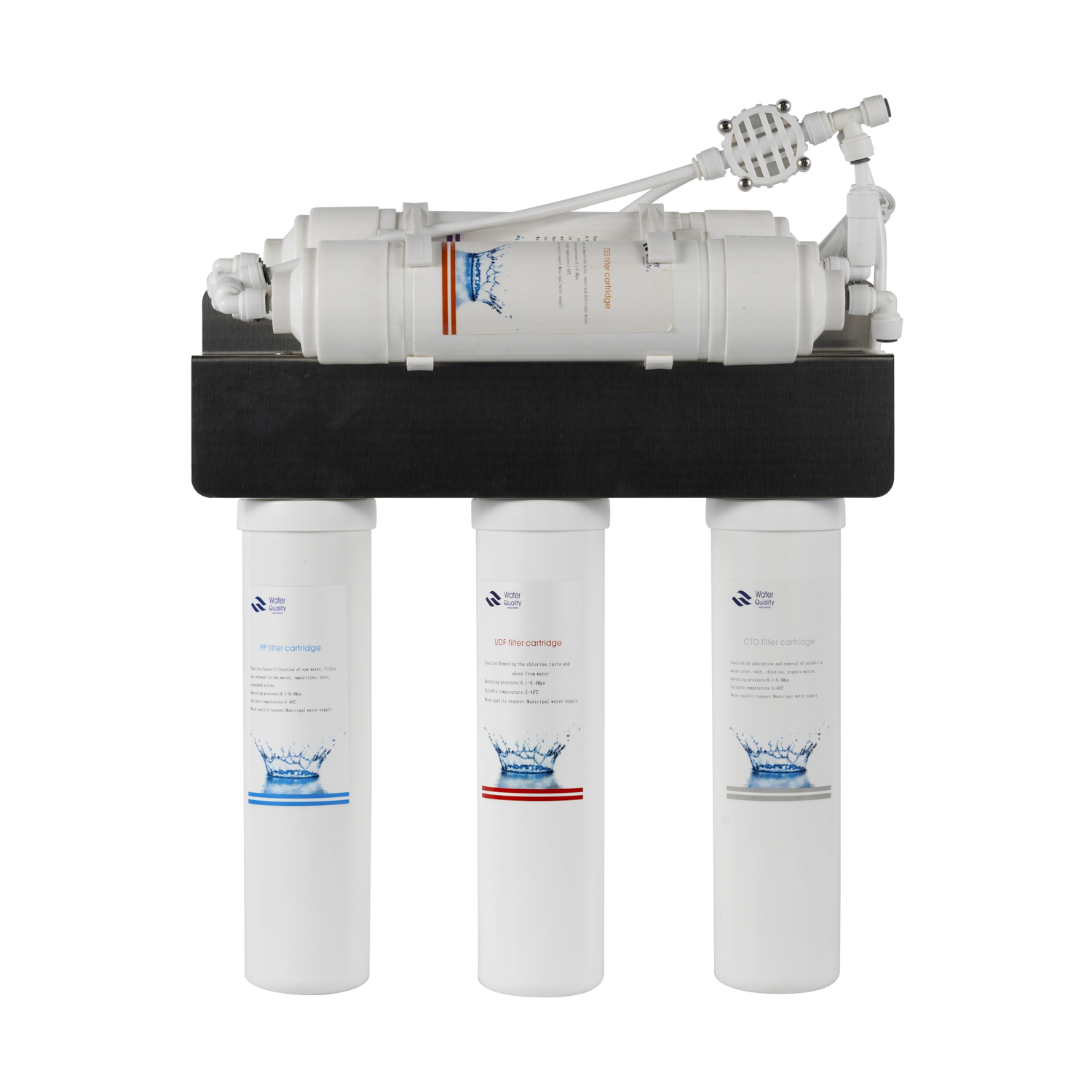
Short answer: in a standard 5-stage reverse osmosis system on treated city water, replace the PP sediment filter every 3-6 months, the GAC and CTO carbon filters every 6-12 months, the T33 post-carbon about once a year, and the RO membrane every 24-36 months. The membrane lasts longest only because the stages before it are changed on time — an exhausted carbon stage lets chlorine reach the membrane, and chlorine damages thin-film composite (TFC) membranes.
Those intervals are starting points, not guarantees. Feed-water quality, daily volume and the system design move them up or down. This guide gives you the stage-by-stage schedule, the signs that a filter is overdue, a simple TDS test for the membrane, and — for distributors and service companies — how to turn the schedule into a replacement-filter stocking plan.
Key takeaways
- Pre-filters are consumables; the membrane is the asset they protect. Change PP and carbon on the calendar; change the membrane on the TDS reading or at 24-36 months, whichever comes first.
- A residential RO membrane is specified at ≥95% salt rejection and a pore size of about 0.0001 µm. Track rejection, not just taste.
- Per 100 installed 5-stage systems, a 6-month PP cycle and 12-month carbon cycle mean about 200 PP + 200 carbon + 100 post-carbon cartridges a year, but only 33-50 membranes.
RO Filter Replacement Schedule by Stage
A typical under-sink RO system runs water through five stages in this order: PP sediment → GAC → CTO carbon block → RO membrane → T33 post-carbon. Our 5-stage RO cartridge set follows exactly this PP-GAC-CTO-RO-T33 sequence. Here is what each stage does and when it is usually replaced.
| Stage | Cartridge | What it protects / removes | Typical replacement (city water) | Shorten the interval when… |
|---|---|---|---|---|
| 1 | PP sediment | Sand, rust, silt; protects carbon and membrane from clogging | 3-6 months | Well water, visible sediment, old pipes |
| 2 | GAC (granular carbon) | Chlorine, taste and odor; first chlorine barrier for the membrane | 6-12 months | High chlorine or chloramine dosing |
| 3 | CTO carbon block | Fine chlorine, taste, odor polishing | 6-12 months | Same as GAC; usually changed together |
| 4 | RO membrane (50/75/100 GPD) | Dissolved salts, heavy metals, most dissolved contaminants | 24-36 months | High TDS, hard water, pre-filters changed late |
| 5 | T33 post-carbon | Final taste polish after the tank | About 12 months | Water from the tank tastes flat or stale |
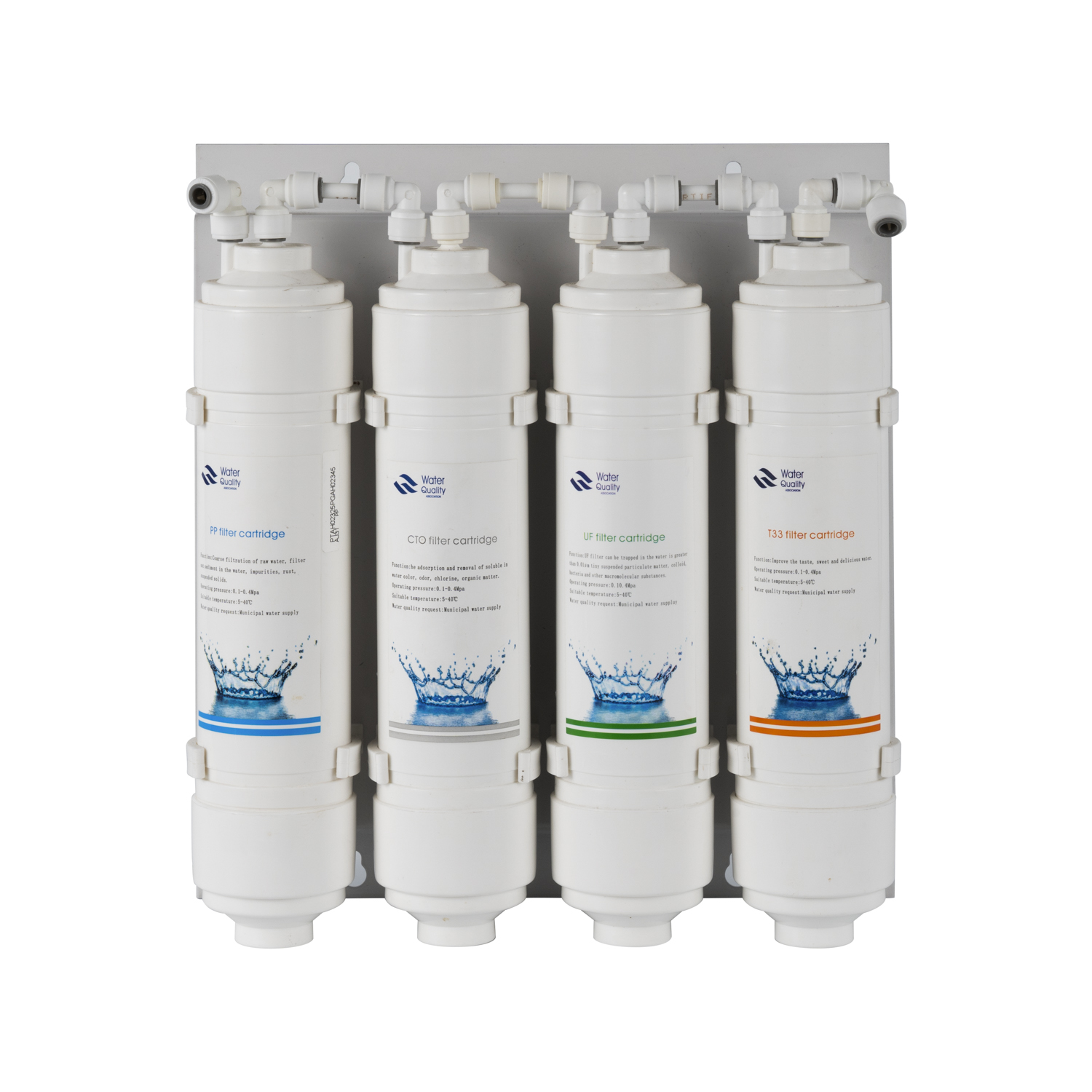
Systems with a UF stage instead of RO (for example a 4-stage PP-CTO-UF-T33 unit) follow the same logic: sediment and carbon on a short cycle, the membrane stage on a longer one.
For a deeper look at what each media type does, see our comparison of sediment vs carbon vs RO membrane stages.
Why the Pre-Filters Decide How Long the Membrane Lasts
Each stage protects the one after it. That is the whole reason RO systems are built from coarse to fine.
PP sediment protects the carbon. If sand and rust reach the carbon block, they plug its surface and the carbon is “used up” by dirt instead of by chlorine. Water pressure across the system drops, and so does RO output.
Carbon protects the membrane. Most residential membranes are thin-film composite. TFC membranes tolerate very little free chlorine; once the GAC and CTO stages are exhausted, chlorine passes straight through and starts degrading the membrane. That damage is not reversible — a new membrane is the only fix.
The membrane protects the water quality. A membrane is rated by its salt rejection (≥95% for our residential RO media) and its daily output in gallons per day (GPD). As a membrane wears out, rejection falls and RO water TDS rises. Fouling also cuts output, so the tank fills more slowly — but chlorine damage can do the opposite and raise output while rejection drops, so a fast-filling tank is not proof of a healthy membrane.
The practical rule for owners and service technicians: never stretch the carbon interval to save money. The carbon cartridges are cheap compared with the membrane they protect.
Looking for a reliable water filter manufacturer?
Get free samples and a factory-direct quote. MOQ from 500 pcs.
Get a Free Quote →Warning Signs an RO Filter Is Overdue
The calendar is the default; these symptoms mean you should change filters earlier.
| Symptom | Most likely stage | What to do |
|---|---|---|
| Tank fills slowly, low flow at the faucet | PP sediment or carbon (clogged) | Replace PP and carbon first, then re-check output |
| Chlorine smell or taste returns | GAC / CTO carbon exhausted | Replace carbon stages immediately to protect the membrane |
| Water tastes flat or stale from the tank | T33 post-carbon | Replace post-carbon; sanitize the tank if needed |
| TDS of RO water is rising | RO membrane | Run the rejection test below |
| Drain water runs constantly, tank never fills | Membrane or valve issue | Check the shut-off valve before replacing the membrane |
| Cartridge housing leaks after a change | O-ring or seating | Re-seat the cartridge; see our cartridge troubleshooting guide |
How to Test the RO Membrane with a TDS Meter
A handheld TDS meter tells you whether the membrane still works — taste alone will not.
- Measure the feed water (cold tap before the RO system). Example: 300 ppm.
- Measure fresh RO water, not water stored in the tank: close the tank valve, open the RO faucet and let the membrane run for a few minutes before you take the reading. Example: 12 ppm.
- Calculate rejection: 1 − (12 ÷ 300) = 0.96, or 96%.
A residential membrane specified at ≥95% salt rejection should test close to its rating when new. Record the reading at installation and at every pre-filter change. Rejection also moves with inlet pressure, water temperature and feed TDS, so compare readings taken under similar conditions. If rejection stays below 85% after you have replaced the PP, carbon and post-carbon stages and confirmed normal inlet pressure, the membrane is due — the same threshold our troubleshooting guide uses. Even with good readings, plan a membrane change at 24-36 months. If rejection recovers after a pre-filter change, the problem was upstream — keep the membrane.
Want to understand membrane ratings before you buy replacements? Our RO membrane sourcing guide covers GPD ratings, rejection rates and membrane construction.
Factors That Shorten or Extend the Schedule
The same system can need a PP change every two months on one site and every six months on another. The main variables:
- Feed-water source. Untreated well water carries more sediment and iron than treated municipal water; PP cartridges load up much faster.
- Feed TDS and hardness. Higher dissolved solids and hardness push more load onto the membrane and shorten its life.
- Chlorine vs chloramine. Chloramine is harder for standard carbon to remove; carbon stages need closer attention where utilities dose chloramine.
- Daily volume. A family of six or a small office drawing water all day uses up cartridges faster than a single-person household.
- Water pressure. Low inlet pressure reduces membrane output and increases the share of water sent to drain.
- Idle time. Cartridges that sit wet and unused for weeks can develop taste problems; flush before use and follow storage guidance in our cartridge shelf-life guide.
For Distributors: Turning the Schedule into a Stocking Plan
If you sell or service RO systems, the replacement schedule is your recurring revenue — and your inventory plan. A simple model per 100 installed 5-stage systems on city water:
| Stage | Assumed interval | Replacements per system per year | Cartridges per 100 systems per year |
|---|---|---|---|
| PP sediment | 6 months | 2 | 200 |
| GAC | 12 months | 1 | 100 |
| CTO carbon block | 12 months | 1 | 100 |
| T33 post-carbon | 12 months | 1 | 100 |
| RO membrane | 24-36 months | 0.33-0.5 | 33-50 |
Adjust the intervals to your market’s water. Where sediment loading is heavy (for example untreated well water), raise the PP line based on the service life you actually observe; where feed TDS and hardness are high, plan for more membranes. Three practical points from our side of the order book:
- Sell pre-filter kits, not single cartridges. Bundling 2 × PP + GAC + CTO + T33 into one annual kit matches how the cartridges actually wear out and simplifies service visits.
- Match the housing format exactly. Replacement filters must fit the system’s format — standard 10-inch, quick-connect U-type and I-type cartridges, or snap-on. A cartridge in the wrong format will not seat or seal.
- Test samples before volume. Check fit, leak-free sealing and flow on your target housings before placing a production order.
Sourcing RO Replacement Filters from a Manufacturer
Ningbo XZH manufactures water filter cartridges in Cixi, Ningbo, with monthly output of 100,000+ units. Injection molding, cartridge assembly and QA testing are done in-house, and every unit goes through in-line testing including a 2.8 MPa burst-pressure check. Key filter media such as the GAC and CTO carbon are sourced from suppliers with active NSF certification.
For RO replacement programs we supply:
- The complete 5-stage RO cartridge set (PP-GAC-CTO-RO-T33) — MOQ 500 pcs, samples available, lead time 15-20 days, FOB Ningbo (per the product page).
- Quick-connect cartridges with six media options — PP (1-5 µm), GAC, CTO, T33, UF (0.01-0.2 µm) and RO (0.0001 µm, ≥95% salt rejection, 50/75/100 GPD).
- Matching residential filtration systems for distributors who want to sell the system and the replacement filters under one brand.
Private-label packaging and custom media are covered on our OEM manufacturing page. To compare RO system types before choosing a replacement line, see our reverse osmosis systems guide and the tankless RO vs tank RO comparison.
Next step: send us your system model or housing photos, your target market and expected annual volume through our quote form, and our team will match the replacement cartridges and confirm MOQ and lead time.
Related Guides
Frequently Asked Questions
- How often should RO filters be replaced?
- On treated municipal water, a typical schedule is: PP sediment pre-filter every 3-6 months, GAC and CTO carbon pre-filters every 6-12 months, T33 post-carbon about every 12 months, and the RO membrane every 24-36 months. Sediment-heavy water shortens the PP interval and high TDS or hardness shortens membrane life, so the system manual and a TDS meter should always override the calendar.
- Do I need to replace all reverse osmosis filters at the same time?
- No. The pre-filters wear out several times faster than the membrane, so most owners replace the PP and carbon stages together on a short cycle and replace the membrane when the TDS test shows rejection below 85% or at 24-36 months, whichever comes first. Changing everything at once is simpler for service companies, but it throws away membrane life.
- What happens if you don't change RO pre-filters on time?
- An exhausted carbon stage lets chlorine through to the RO membrane. Thin-film composite (TFC) membranes are damaged by chlorine, so skipping an inexpensive carbon change can cost you the most expensive cartridge in the system. A clogged PP stage also drops pressure and output.
- How do I know when the RO membrane needs replacing?
- Measure TDS of the feed water and of fresh RO water (not water stored in the tank) and calculate rejection: 1 minus (RO water TDS divided by feed TDS). A healthy residential membrane is specified at 95% or higher salt rejection. If rejection stays below 85% after you have replaced the pre-filters and post-filter and confirmed normal inlet pressure, or the membrane has reached 24-36 months, replace it.
- Can I use compatible replacement filters instead of the original brand?
- Yes, as long as the cartridge matches the housing format (standard 10-inch, quick-connect U-type or I-type, or snap-on), the connection type and the media sequence of the system. Compatible cartridges should be checked for fit, flow and leak-free sealing on a sample before you order in volume.
Looking for OEM Water Filter Cartridges?
Get a factory-direct quote from Ningbo XZH — 15+ years OEM experience, 50+ export markets, MOQ from 500 pcs.
Get a Free Quote →Get Our Full Product Catalog
100+ SKUs with specs, MOQ, and factory-direct wholesale pricing — everything covered in this article and more.