Blog ·
Sediment Filter vs Carbon Filter vs RO Membrane: Which Water Filtration Stage Do You Need?
Compare sediment (PP), activated carbon (GAC/CTO), and RO membrane filtration stages — micron ratings, contaminants removed, flow rates, costs, and how to combine them for residential, commercial, and industrial systems. Manufacturer data inside.
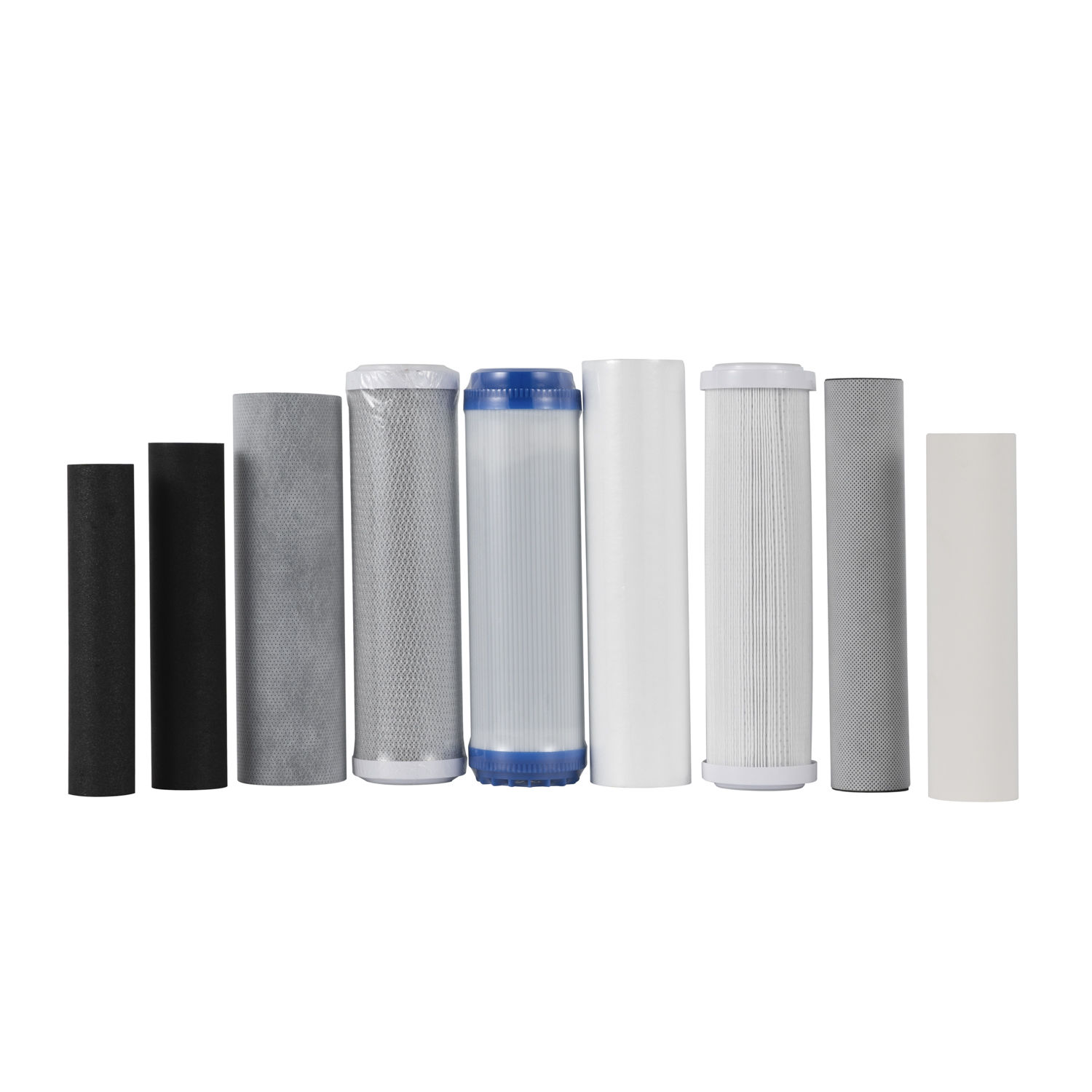
Every water filtration system — from a single under-sink unit to a 50,000 GPD industrial plant — is built from the same three core technologies: sediment filtration, activated carbon adsorption, and reverse osmosis membrane separation. Each technology removes a different class of contaminants. Understanding what each stage does (and does not do) is the foundation for specifying the right system for any application.
This guide breaks down all three filtration stages with manufacturer-level technical data — micron ratings, removal efficiencies, flow rates, replacement costs — so that distributors, system integrators, and facility managers can make informed decisions.
(Looking for individual stage deep-dives? See our PP sediment filter guide, CTO carbon block guide, and RO membrane sourcing guide.)
Stage 1: Sediment Filtration (PP Melt-Blown & Pleated)
Sediment filters are the first line of defense. They use mechanical particle exclusion — no chemistry, no membranes — to physically block suspended solids before water reaches downstream stages.
How It Works
Water flows from the outside of the cartridge inward through layers of polypropylene (PP) fiber. Particles larger than the rated micron size are trapped in the fiber matrix. A well-made melt-blown PP cartridge has a graded-density structure — coarser fibers on the outside catch large particles (50+ microns), while progressively tighter fibers toward the core catch fine particles (1-5 microns). This design maximizes dirt-holding capacity and extends service life.
What Sediment Filters Remove
- Sand, silt, and clay particles
- Rust and pipe scale
- Suspended algae and sediment
- Visible turbidity and cloudiness
- Large cysts (Giardia, Cryptosporidium at 1 micron absolute rating)
What Sediment Filters Do NOT Remove
- Dissolved chemicals (chlorine, pesticides, VOCs)
- Dissolved metals (lead, mercury, arsenic)
- Dissolved salts and minerals (hardness, TDS)
- Bacteria and viruses
- Taste and odor compounds
Key Specifications
| Parameter | Typical Range |
|---|---|
| Micron rating | 1 μm – 50 μm (5 μm most common for residential) |
| Flow rate (10” cartridge) | 1.0 – 4.0 GPM |
| Flow rate (20” cartridge) | 3.0 – 8.0 GPM |
| Dirt-holding capacity | 10,000 – 40,000 mg (varies by micron rating) |
| Max operating temperature | 45°C / 113°F (standard PP) |
| Replacement interval | 3 – 6 months (municipal water) |
| Unit cost (OEM, 10” standard) | $0.30 – $0.80 |
Manufacturer note: Melt-blown PP cartridges are the most cost-effective pre-filter option. At XZH, we produce both melt-blown (gradient density, 1-50 μm) and string-wound variants in all standard sizes — 10”, 20”, 30”, and 40” lengths with 2.5” and 4.5” diameters. For detailed specifications and bulk pricing, see our standard cartridge catalog.
Stage 2: Activated Carbon Filtration (GAC / CTO / Carbon Block)
Activated carbon is the workhorse of chemical contaminant removal. Where sediment filters catch particles by size, carbon filters remove dissolved chemicals through adsorption — contaminant molecules bond to the massive internal surface area of the carbon media.
Carbon Media Types
Granular Activated Carbon (GAC): Loose carbon granules packed in a cartridge shell. Higher flow rates but shorter contact time. Best for whole-house systems where flow demand is high and the primary target is chlorine reduction.
CTO Carbon Block: Carbon powder compressed and sintered into a solid cylindrical block. The tight pore structure provides both chemical adsorption and mechanical filtration (typically 5-10 μm). Higher chlorine reduction rates and more consistent performance than GAC.
Coconut Shell Carbon: The premium source material. Coconut shell activated carbon has 50-70% more micropores (<2 nm) than coal-based carbon, making it superior for chlorine and VOC adsorption. Our coconut shell carbon guide covers the manufacturing differences in detail.
What Carbon Filters Remove
- Free chlorine (>95% reduction with carbon block, 70-85% with GAC)
- Chloramine (requires catalytic carbon; standard carbon removes only 30-50%)
- Taste and odor compounds (geosmin, MIB)
- Volatile organic compounds (VOCs): benzene, toluene, TCE
- Select pesticides and herbicides (atrazine, lindane)
- Sediment (carbon block only, 5-10 μm mechanical filtration)
- Some heavy metals via catalytic reduction (lead reduction varies by formulation)
What Carbon Filters Do NOT Remove
- Dissolved salts and minerals (TDS, hardness)
- Nitrates, fluoride, and arsenic
- Bacteria and viruses (not a disinfection barrier)
- Total dissolved solids above 10-20 ppm reduction
Key Specifications
| Parameter | GAC (Granular) | CTO Carbon Block |
|---|---|---|
| Micron rating | 20 – 50 μm (nominal) | 0.5 – 10 μm |
| Chlorine reduction | 70 – 85% | >95% (NSF 42 certified) |
| VOC reduction | 50 – 70% | >90% |
| Flow rate (10” cartridge) | 1.0 – 3.0 GPM | 0.5 – 1.5 GPM |
| Service capacity | 5,000 – 10,000 gallons | 3,000 – 8,000 gallons |
| Max operating temperature | 45°C / 113°F | 45°C / 113°F |
| Replacement interval | 6 – 12 months | 6 – 12 months |
| Unit cost (OEM, 10” standard) | $0.80 – $2.00 | $1.50 – $4.00 |
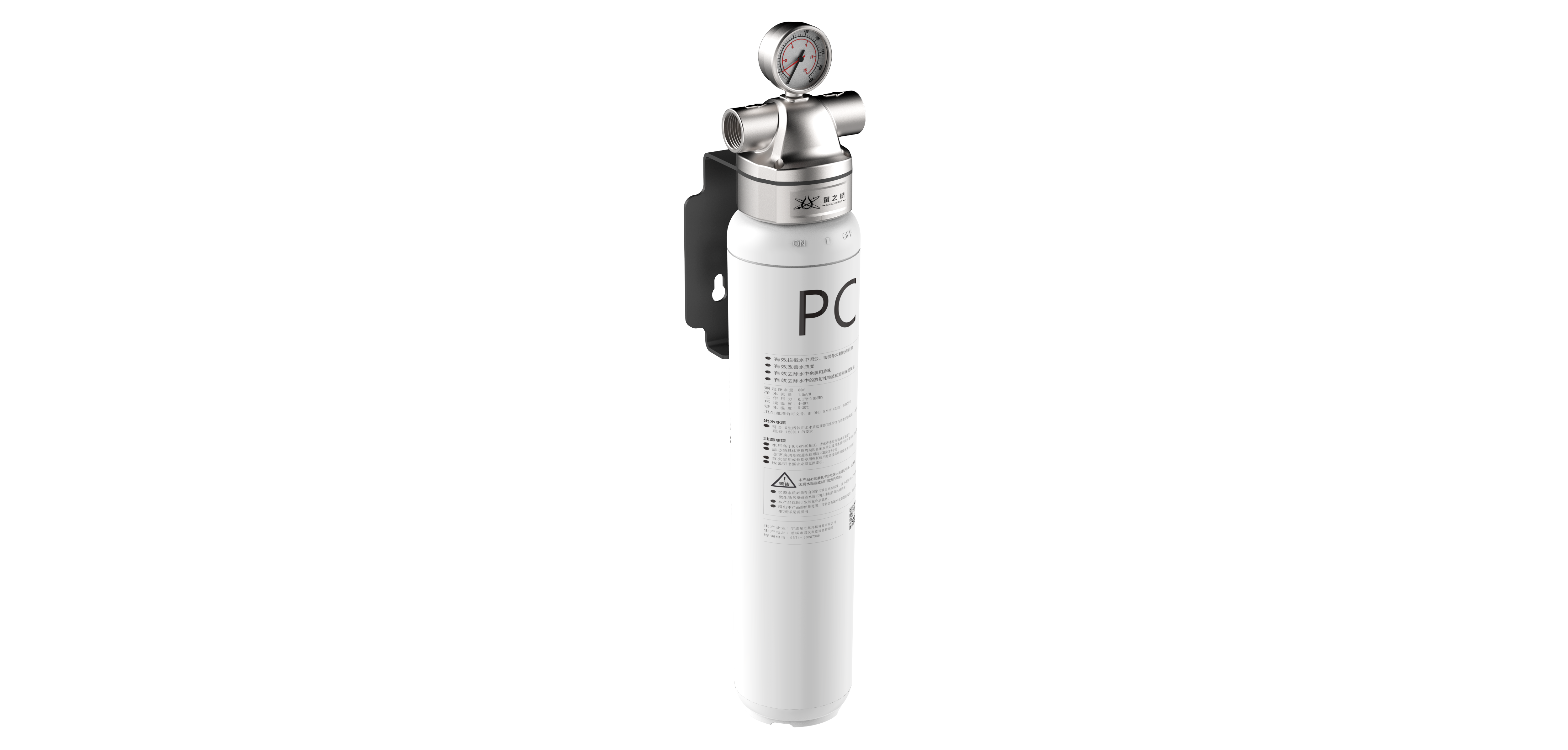
Manufacturer note: We produce both GAC and CTO carbon block cartridges using 100% coconut shell activated carbon (1000+ iodine number). Available in standard 10”/20” format, inline quick-connect configurations, and Everpure-compatible bayonet formats. Custom carbon formulations (catalytic carbon for chloramine, silver-impregnated for bacteriostatic properties) available from 500 pcs MOQ.
Looking for a reliable water filter manufacturer?
Get free samples and a factory-direct quote. MOQ from 500 pcs.
Get a Free Quote →Stage 3: Reverse Osmosis (RO) Membrane
RO membranes provide the deepest level of purification available in a cartridge-based system. They operate on a fundamentally different principle from sediment and carbon filters — instead of trapping or adsorbing contaminants, RO forces water molecules through a semi-permeable membrane with pore sizes of approximately 0.0001 μm (0.1 nanometers). This is small enough to reject dissolved salts, heavy metals, and virtually all molecular contaminants.
How RO Works
Feed water is pressurized (typically 40-80 PSI for residential, 150-400 PSI for commercial/industrial) and pushed across a thin-film composite (TFC) membrane. Clean water (permeate) passes through; dissolved solids and contaminants are concentrated in the reject stream (brine), which is flushed to drain.
The key trade-off: RO produces extremely pure water, but at a cost — recovery rates for residential systems are typically 25-35% (meaning 65-75% of incoming water goes to drain), and flow rates are measured in gallons per day rather than gallons per minute.
What RO Membranes Remove
- Total dissolved solids (TDS): 95-99% rejection
- Heavy metals: lead, mercury, arsenic, cadmium, chromium
- Dissolved salts: sodium, calcium, magnesium, chloride, sulfate
- Nitrates and fluoride (>90% rejection)
- Bacteria and viruses (>99.9% — serves as a microbial barrier)
- Pharmaceuticals and PFAS (per- and polyfluoroalkyl substances)
- All contaminants removed by sediment and carbon stages
What RO Does NOT Do Well
- Does not remove dissolved gases (CO2 passes through, lowering permeate pH)
- Does not remove chlorine — chlorine damages TFC membranes; carbon pre-filtration is mandatory
- Low flow rate compared to other stages (50-800 GPD per residential membrane)
- Generates wastewater (reject/brine stream)
- Removes beneficial minerals along with contaminants
Key Specifications
| Parameter | Residential (50-100 GPD) | Commercial (200-800 GPD) | Industrial (1,000+ GPD) |
|---|---|---|---|
| Membrane pore size | 0.0001 μm | 0.0001 μm | 0.0001 μm |
| TDS rejection | 95 – 97% | 97 – 99% | 98 – 99.5% |
| Operating pressure | 40 – 80 PSI | 100 – 200 PSI | 150 – 400 PSI |
| Recovery rate | 25 – 35% | 50 – 75% | 75 – 90% |
| Flow rate | 50 – 100 GPD | 200 – 800 GPD | 1,000 – 50,000 GPD |
| Replacement interval | 24 – 36 months | 12 – 24 months | 12 – 18 months |
| Unit cost (OEM) | $8 – $25 | $30 – $80 | $100 – $500+ |
Manufacturer note: XZH supplies residential RO membranes (50/75/100/400 GPD) and commercial RO membranes for integration into multi-stage systems. Our tankless RO systems use high-output 400-600 GPD membranes that eliminate the storage tank entirely — a growing trend in the residential market. See our RO membrane sourcing guide for detailed specifications.
Side-by-Side Comparison: All Three Stages
| Characteristic | Sediment (PP) | Activated Carbon (CTO) | RO Membrane |
|---|---|---|---|
| Filtration mechanism | Mechanical particle exclusion | Chemical adsorption + mechanical | Molecular separation |
| Effective pore size | 1 – 50 μm | 0.5 – 10 μm (carbon block) | 0.0001 μm |
| Chlorine removal | None | >95% | N/A (must be pre-removed) |
| TDS removal | None | Negligible | 95 – 99% |
| Bacteria/virus removal | Partial (cysts only at 1μm) | None | >99.9% |
| Heavy metals | None | Partial (lead, select metals) | >95% |
| VOCs/pesticides | None | >90% | >95% |
| Flow rate impact | Minimal | Moderate | Significant (low flow) |
| Wastewater generated | None | None | 25 – 75% of feed water |
| Replacement frequency | 3 – 6 months | 6 – 12 months | 24 – 36 months |
| OEM unit cost (10” std) | $0.30 – $0.80 | $1.50 – $4.00 | $8 – $25 (membrane element) |
| Position in system | Stage 1 (pre-filter) | Stage 2 (primary treatment) | Stage 3 (final purification) |
When to Use Each Stage: Application Matching
Residential Point-of-Use
Municipal water (chlorinated, TDS < 300 ppm):
- Minimum: Sediment + Carbon Block (2-stage) — removes chlorine, taste, odor, and particles
- Recommended: Sediment + Carbon + Carbon Block (3-stage) — for higher chemical reduction capacity
- Maximum: 5-stage RO (Sediment → GAC → Carbon Block → RO → Post-carbon) — for lowest possible TDS
Well water (untreated, variable quality):
- Minimum: Sediment + Carbon Block + RO (3-stage) — address unknown contamination risks
- Add-on: Iron/manganese filter (if Fe > 0.3 ppm), UV sterilizer (if bacteria present)
For complete residential system design, see our under-sink water filter guide and whole house water filter guide.
Commercial Foodservice
Espresso machines and coffee brewers: Sediment (5 μm) + Carbon Block (1-5 μm) + Scale Inhibitor. Carbon removes chlorine that damages flavor; scale inhibitor prevents calcium buildup. TDS should remain at 75-250 ppm for optimal extraction — do NOT use RO unless re-mineralizing.
Ice machines: Sediment (5 μm) + Carbon Block (0.5-1 μm). Chlorine removal prevents off-flavors; fine particle removal produces clear ice. Our ice machine filter guide covers sizing calculations.
Steam ovens and combi ovens: Sediment + RO (or RO + DI). Steam equipment requires very low TDS (<50 ppm) to prevent scale accumulation on heating elements. Our combi oven water treatment guide covers commercial kitchen requirements.
Industrial Applications
Pharmaceutical and laboratory: Multi-stage RO + DI (deionized) resin + UV sterilization. Target: Type II or Type I purified water per USP standards. Requires 5-7 treatment stages.
Food and beverage production: Sediment + Carbon + RO (with remineralization for bottled water). Production-grade systems require NSF/ANSI 61 certified components and full traceability documentation.
Boiler feed water: Sediment + Softener + RO. TDS and hardness must be minimized to prevent scale and corrosion in boiler systems. Recovery rates of 75-90% are achievable with commercial RO systems.
Designing a Multi-Stage System: The Right Order Matters
The golden rule of multi-stage water filtration: always filter from coarse to fine. Each stage protects the next.
Standard 3-Stage System (Most Common)
- Stage 1 — PP Sediment (5 μm): Catches sand, rust, silt. Protects carbon from clogging. Cost: ~$0.50/cartridge.
- Stage 2 — CTO Carbon Block (5 μm): Removes chlorine, taste, odor, VOCs. Protects RO membrane from chlorine damage. Cost: ~$2.50/cartridge.
- Stage 3 — RO Membrane (0.0001 μm): Removes dissolved solids, heavy metals, bacteria. Produces purified water. Cost: ~$15/membrane.
Total cartridge cost per replacement cycle: approximately $18. Compare this to single-brand proprietary cartridge systems that charge $60-150 for functionally identical stages.
Standard 5-Stage Residential RO System
- PP Sediment (5 μm)
- GAC Pre-carbon (removes chlorine, protects membrane)
- CTO Carbon Block (polishes chlorine removal to >99%)
- RO Membrane (75-100 GPD)
- Post-carbon T33 (improves stored water taste)
6-Stage System (Premium)
Add a remineralization cartridge (calcite or alkaline mineral ball) after the post-carbon to restore pH and beneficial minerals. This is increasingly standard in markets where consumers are concerned about demineralized water.
Common Design Mistakes
Mistake 1: Skipping the sediment pre-filter. A $0.50 PP cartridge extends the life of a $15 RO membrane by 12-18 months. The ROI is 30:1.
Mistake 2: Running carbon as Stage 1 with no sediment pre-filter. Carbon cartridges are 3-8x more expensive than PP sediment cartridges and will be consumed by the sediment load rather than doing their intended chemical removal work.
Mistake 3: Not protecting RO membranes from chlorine. Free chlorine at concentrations above 0.1 ppm oxidizes TFC membrane material, causing irreversible damage. Carbon filtration upstream is mandatory — not optional.
Mistake 4: Over-specifying stages for the application. A restaurant that only needs chlorine and sediment removal does not need a 5-stage RO system. Over-specification increases cost, maintenance complexity, and water waste without meaningful benefit.
OEM Sourcing: All Stages from One Manufacturer
One of the advantages of working with a full-line cartridge manufacturer is consolidated sourcing. Instead of buying sediment cartridges from one vendor, carbon from another, and membranes from a third, a single factory can supply:
- PP sediment cartridges (melt-blown and string-wound, 1-50 μm)
- GAC and CTO carbon block cartridges (coconut shell, 0.5-10 μm)
- RO membranes (50-600 GPD residential, commercial on request)
- Inline quick-connect cartridges for under-sink and refrigerator systems
- Complete multi-stage machine cartridge sets for water purifier OEMs
Benefits of single-source supply: one quality system, one logistics chain, one point of contact for technical support. Custom branding and private-label packaging available from 200 pcs MOQ per SKU. See our OEM manufacturing process for capabilities and lead times.
Frequently Asked Questions
Can I use only a carbon filter without a sediment pre-filter?
Technically yes, but it is not recommended. Without a sediment pre-filter, sand, rust, and silt particles will clog the carbon media much faster — reducing effective service life by 40-60%. A $2 PP sediment cartridge protects a $15-30 carbon block from premature fouling. Always install sediment filtration upstream of carbon.
What is the difference between GAC, CTO, and carbon block filters?
GAC (Granular Activated Carbon) uses loose carbon granules — high flow rate but lower contaminant contact time. CTO (Chlorine, Taste, Odor) carbon block uses compressed carbon powder sintered into a solid block — slower flow but much finer filtration (typically 5-10 microns vs 20-50 microns for GAC). Carbon block provides more consistent performance and higher chlorine reduction rates (>95% vs 70-85% for GAC).
Does an RO membrane remove beneficial minerals from water?
Yes — RO membranes remove 95-99% of all dissolved solids, including calcium, magnesium, and other minerals. For drinking water applications, many system designers add a post-RO remineralization cartridge (calcite or mineral ball) to restore 20-40 ppm of beneficial minerals and raise the pH from ~5.5 to 7.0-7.5.
How often should each filtration stage be replaced?
General guidelines for municipal water: PP sediment filters every 3-6 months, GAC/CTO carbon cartridges every 6-12 months, and RO membranes every 24-36 months. High-sediment well water may require PP changes every 4-8 weeks. See our replacement schedule guide for detailed interval recommendations by water source type.
What is the minimum number of stages needed for safe drinking water?
For municipal water (already disinfected), a 2-stage system (sediment + carbon block) handles chlorine, taste, odor, and particulates effectively. For well water, untreated sources, or high-TDS water (>300 ppm), a minimum 3-stage system (sediment + carbon + RO) is recommended. Commercial foodservice typically uses 2-3 stages; pharmaceutical manufacturing may require 5-7 stages.
Summary
- Sediment (PP) catches particles — cheap, essential, always Stage 1. Micron range: 1-50 μm.
- Activated carbon (GAC/CTO) removes chemicals — chlorine, taste, odor, VOCs. Chlorine reduction >95% with carbon block.
- RO membrane removes dissolved solids — TDS rejection 95-99%, the deepest purification available.
- Sequence matters: coarse to fine, always. Each stage protects the next.
- Application dictates stages: municipal drinking water needs 2-3 stages; commercial foodservice 2-3; industrial 5-7.
Need help specifying the right filtration stages for your application? Contact our engineering team — we design multi-stage systems for distributors and OEM brands worldwide, with all stages manufactured under one roof. Send us your water quality report and target specifications for a complete system recommendation.
Frequently Asked Questions
- Can I use only a carbon filter without a sediment pre-filter?
- Technically yes, but it is not recommended. Without a sediment pre-filter, sand, rust, and silt particles will clog the carbon media much faster — reducing effective service life by 40-60%. A $2 PP sediment cartridge protects a $15-30 carbon block from premature fouling. Always install sediment filtration upstream of carbon.
- What is the difference between GAC, CTO, and carbon block filters?
- GAC (Granular Activated Carbon) uses loose carbon granules — high flow rate but lower contaminant contact time. CTO (Chlorine, Taste, Odor) carbon block uses compressed carbon powder sintered into a solid block — slower flow but much finer filtration (typically 5-10 microns vs 20-50 microns for GAC). Carbon block provides more consistent performance and higher chlorine reduction rates (>95% vs 70-85% for GAC).
- Does an RO membrane remove beneficial minerals from water?
- Yes — RO membranes remove 95-99% of all dissolved solids, including calcium, magnesium, and other minerals. For drinking water applications, many system designers add a post-RO remineralization cartridge (calcite or mineral ball) to restore 20-40 ppm of beneficial minerals and raise the pH from ~5.5 to 7.0-7.5. This is a standard stage in 5-stage and 6-stage residential RO systems.
- How often should each filtration stage be replaced?
- General guidelines based on municipal water supply: PP sediment filters every 3-6 months, GAC/CTO carbon cartridges every 6-12 months, and RO membranes every 24-36 months. Actual replacement intervals depend on incoming water quality — high-sediment well water may require PP changes every 4-8 weeks, while pre-treated municipal water may allow 6+ months per cartridge.
- What is the minimum number of filtration stages needed for safe drinking water?
- For municipal water (already disinfected), a 2-stage system (sediment + carbon block) provides effective chlorine, taste, odor, and particulate removal for general drinking use. For well water, untreated water, or water with high TDS (>300 ppm), a minimum 3-stage system (sediment + carbon + RO membrane) is recommended. Commercial foodservice applications typically use 2-3 stages; pharmaceutical and semiconductor manufacturing may require 5-7 stages including DI resin and UV sterilization.
Looking for OEM Water Filter Cartridges?
Get a factory-direct quote from Ningbo XZH — 15+ years OEM experience, 50+ export markets, MOQ from 500 pcs.
Get a Free Quote →Get Our Full Product Catalog
100+ SKUs with specs, MOQ, and factory-direct wholesale pricing — everything covered in this article and more.